Many business owners know their sales numbers.
They know how much cash is in the bank. They know which customers they enjoy working with and which products seem to be selling well.
But ask a simple question: “Which product generates your highest profit margin?” And many businesses struggle to answer.
That gap is where cost accounting becomes one of the most valuable tools a growing company can implement.
Despite the technical name, cost accounting is not about creating more reports or adding complexity. At its core, it is about understanding what drives profitability and making better business decisions.
The Difference Between Revenue and Profitability
One of the biggest misconceptions in business is assuming that strong sales automatically translate into strong profits.
In reality, two products with similar sales volumes can produce dramatically different results.
One may require excessive labor, frequent rework, expensive materials, or operational inefficiencies that quietly erode margins. Another may generate significantly higher profits while requiring fewer resources.
Without a reliable cost accounting system, these differences often remain hidden.
Business owners may continue investing in products, customers, or services that appear successful on the surface but are actually reducing profitability.
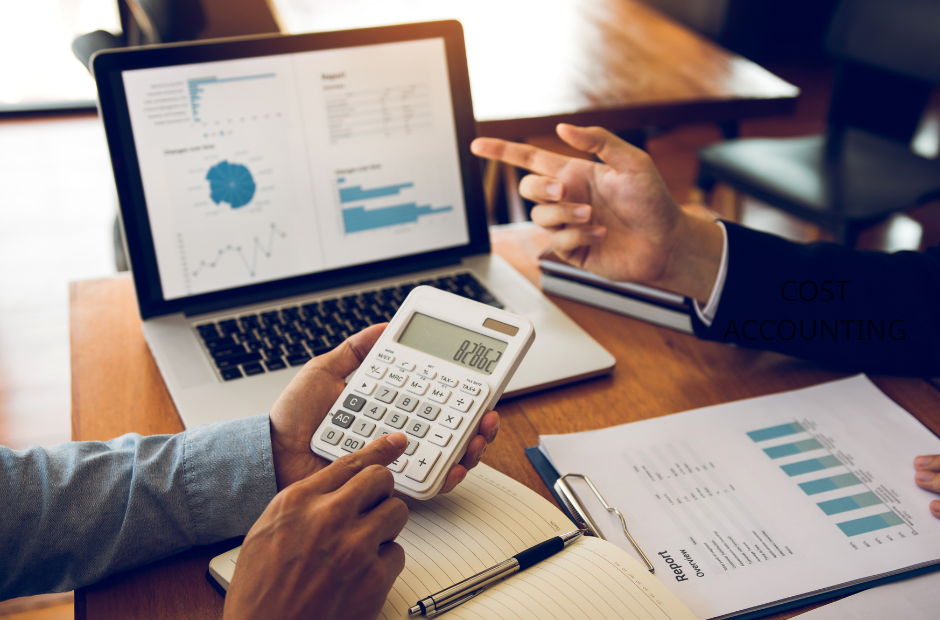
Cost accounting helps answer critical questions such as:
- Which products are most profitable?
- Which customers generate the strongest margins?
- Where are costs increasing?
- Are pricing decisions still aligned with current costs?
- Which operational processes need improvement?
These answers become increasingly important as organizations grow.
Why Standard Costing Is So Common
Most manufacturing businesses use some form of standard costing because it provides a practical framework for managing large volumes of transactions.
Under standard costing, businesses establish expected costs for:
- Materials
- Labor
- Manufacturing overhead
These standards are based on historical performance, purchasing trends, operational expectations, and production data.
The goal is not to predict costs perfectly.
The goal is to create a benchmark that allows management to identify variances and investigate why actual results differ from expectations.
For example:
If material costs increase due to supplier pricing changes, tariffs, or freight expenses, the variance becomes visible.
If labor efficiency declines because of overtime, production delays, or staffing challenges, management can quickly identify the issue.
Rather than simply recording transactions, standard costing creates visibility into operational performance.
Variances Are Not Problems, They’re Signals
One of the most important concepts discussed in cost accounting is that variances are expected.
In fact, a business with no variances at all would be unusual.
Material prices fluctuate. Labor costs change. Production efficiencies improve or decline. Utility expenses vary throughout the year.
The purpose of cost accounting is not to eliminate every variance.
The purpose is to understand what the variances are telling you.
For example:
- A material variance may indicate supplier pricing issues.
- A labor variance may reveal overtime or productivity challenges.
- An overhead variance may uncover changes in utility costs or facility expenses.
These insights allow management teams to focus their attention where it matters most.
In many ways, cost accounting functions are like a dashboard for the business. It highlights where leaders should investigate before small problems become significant ones.
The Risk of Outdated Cost Information
One common issue many organizations face is relying on outdated assumptions.
Material costs, labor rates, tariffs, and operating expenses rarely remain static.

Yet many businesses continue using the same costing assumptions for years.
When standards are not reviewed regularly, companies risk:
- Overstating inventory values
- Understating costs
- Mispricing products
- Making poor budgeting decisions
- Misunderstanding profitability
This risk becomes especially significant during periods of inflation, supply chain disruption, or rapidly changing labor markets.
A costing system should evolve alongside the business environment.
Cost Accounting Is About Operations, Not Accounting
Many owners hear the phrase “cost accounting” and immediately assume it is an accounting exercise.
The reality is that effective cost accounting starts with operations.
To understand costs, leaders must understand:
- How products are manufactured
- How labor is utilized
- How materials flow through production
- Where bottlenecks occur
- Which processes create inefficiencies
The most effective financial professionals often spend time on the production floor, observing how the business actually operates.
When operational insight and financial analysis work together, organizations gain a clearer picture of where opportunities exist.
The Questions Every Business Owner Should Be Able to Answer
Regardless of industry, every business should strive to answer a few fundamental questions:
- Which products generate the highest margins?
- Which customers are most profitable?
- Which products should be expanded?
- Which products should be discontinued?
- What is driving increases in costs?
- How do operational decisions impact profitability?
If those answers are unclear, cost accounting can often provide the missing visibility.
The Bottom Line
Most business owners focus on growing revenue.
The strongest businesses focus should be on understanding profitability.
Cost accounting is not simply an accounting function; it is a decision-making tool that helps leaders connect operations, pricing, efficiency, and financial performance.
When implemented effectively, it provides the insight needed to improve margins, strengthen cash flow, and make more informed strategic decisions.
The businesses that understand their costs are ultimately better positioned to control their future.
About Imperial Advisory
Imperial Advisory provides fractional and interim CFO support to growing, changing, or financially challenged businesses.
At its core, Imperial helps owners understand what is really happening financially, make better decisions, and build a stronger finance function.
About the Author
Marty Latman is a Fractional CFO at Imperial Advisory and a seasoned Chief Executive and Financial Officer with decades of experience helping organizations improve performance, strengthen operations, and navigate growth and transformation. Throughout his career, he has led finance, operations, and technology initiatives across manufacturing, distribution, consumer products, services, and nonprofit organizations, consistently delivering measurable improvements in profitability, cash flow, and operational efficiency. A Certified Public Accountant (CPA) and Certified Information Systems Auditor (CISA), Martin is the recipient of the NJBIZ CFO of the Year and New Jersey Financial Executive of the Year awards, recognizing his outstanding financial leadership.
Gershon Morgulis is the founder and principal of Imperial Advisory. He has provided CFO services for companies across a wide range of industries, acting as an advisor to CEOs and CFOs on issues relating to both day-to-day profitability and long-term strategic growth planning. He has a BA with concentration in Business from Fairleigh Dickinson University and an MBA in Finance with distinction from Hofstra University.